Dropshipping vs. Ecommerce in 2026: A ZeeDPosh Guide to Avoiding Costly Errors
Introduction: The E-Commerce Landscape in 2026
Welcome to 2026! The digital marketplace is more competitive than ever. Choosing the right business model – dropshipping or traditional ecommerce – is crucial for success. At ZeeDPosh, we've seen countless entrepreneurs thrive and fail. This guide focuses on the biggest mistakes we’ve observed and how you can steer clear of them, ensuring your online venture flourishes.
Understanding Dropshipping in 2026
Dropshipping, in essence, is a retail fulfillment method where you don't keep the products you sell in stock. Instead, when a customer places an order through your ZeeDPosh store, you forward it to a third-party supplier, who then ships the product directly to the customer. This eliminates the need for inventory management and upfront capital investment in stock.
The #1 Mistake: Thinking Dropshipping is a "Get Rich Quick" Scheme. By 2026, this myth has been thoroughly debunked. Dropshipping requires hard work, dedication, and a strategic approach. Don't fall for the illusion of effortless profits. Success hinges on careful product selection, marketing prowess, and exceptional customer service.
How to Avoid It: Treat dropshipping as a real business. Develop a comprehensive business plan, conduct thorough market research, and invest time in building a strong brand.
Understanding Traditional Ecommerce in 2026
Traditional ecommerce involves purchasing and storing inventory, managing your own fulfillment process (or outsourcing it to a 3PL), and directly shipping products to customers. This model offers greater control over product quality, branding, and customer experience but demands more upfront investment and operational complexity.
The #1 Mistake: Underestimating Inventory Management. Many ecommerce businesses fail due to poor inventory control. Overstocking ties up capital, while stockouts lead to lost sales and disappointed customers. In 2026, efficient inventory management systems are non-negotiable.
How to Avoid It: Implement a robust inventory management system (IMS) integrated with your ZeeDPosh store. Use data analytics to forecast demand accurately, optimize reorder points, and minimize waste. Consider using AI-powered tools for demand prediction.
Key Differences: Dropshipping vs. Ecommerce
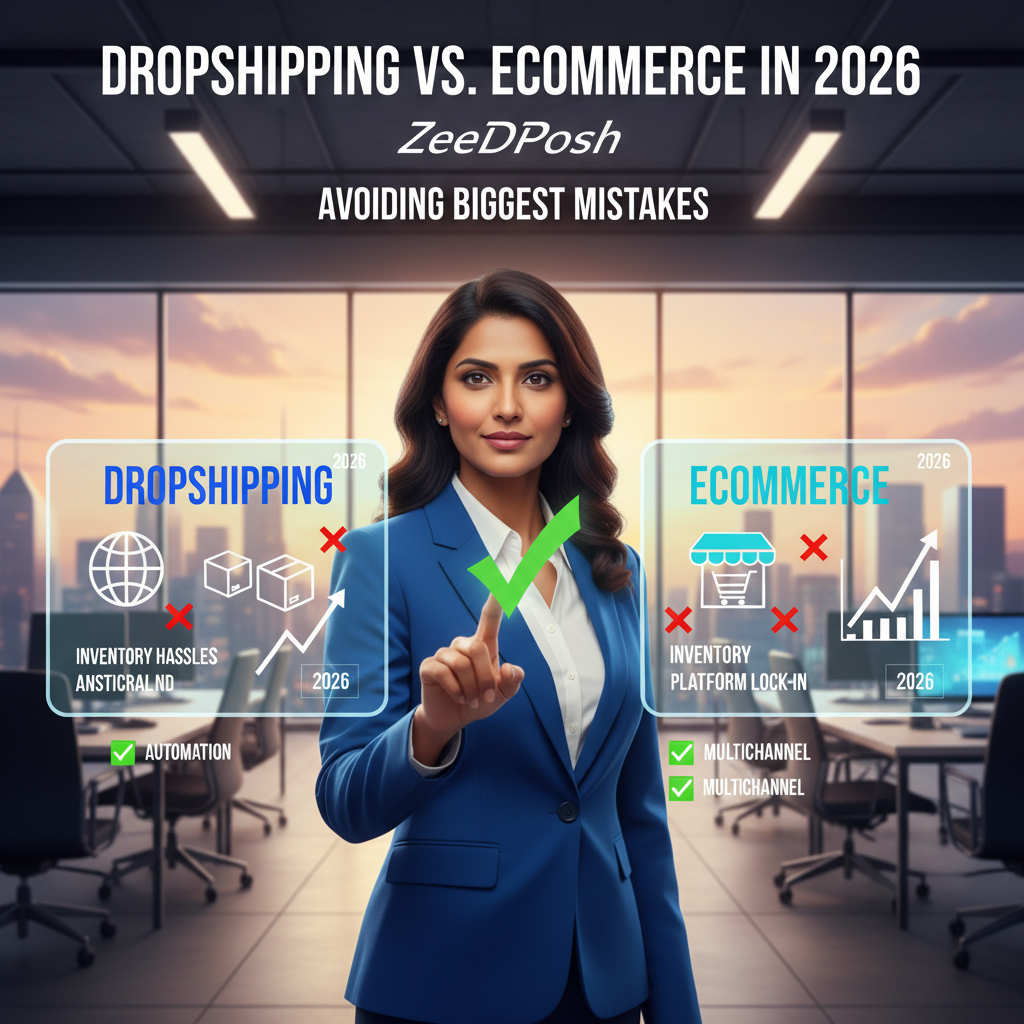
- Inventory Management: Dropshipping eliminates inventory management, while ecommerce requires it.
- Startup Costs: Dropshipping generally has lower startup costs compared to traditional ecommerce.
- Profit Margins: Dropshipping often has lower profit margins due to reliance on suppliers.
- Control: Ecommerce offers greater control over product quality, branding, and customer experience.
- Scalability: Dropshipping can be more scalable initially, but long-term scalability depends on supplier reliability.
Mistake #2: Ignoring Product Research (For Both Models)
Whether you're dropshipping or selling your own products, neglecting product research is a recipe for disaster. In 2026, saturated markets are everywhere. Selling generic, uninspired products will lead to low sales and high marketing costs.
How to Avoid It: Use advanced market research tools to identify trending products, analyze competitor offerings, and assess market demand. Look for niche markets with unmet needs. Consider using AI-powered product research tools that analyze social media trends and customer reviews.
Mistake #3: Neglecting Customer Service
In the age of instant gratification, exceptional customer service is paramount. Poor customer service can quickly damage your brand reputation and lead to negative reviews, especially on ZeeDPosh. This applies to both dropshipping and traditional ecommerce.
How to Avoid It (Dropshipping): Even though you don't handle fulfillment, you're responsible for addressing customer inquiries, resolving issues, and managing returns. Establish clear communication channels with your suppliers to ensure timely and accurate information. Invest in customer service training for your team. Consider using AI-powered chatbots to provide instant support.
How to Avoid It (Ecommerce): Provide multiple channels for customer support (email, phone, chat). Offer fast and reliable shipping. Implement a hassle-free return policy. Proactively address customer concerns and complaints. Use customer feedback to improve your products and services.
Mistake #4: Skimping on Marketing and Branding
A great product is useless if nobody knows about it. In 2026, effective marketing and branding are essential for driving traffic to your ZeeDPosh store and converting visitors into customers. This is true for both dropshipping and traditional ecommerce businesses.
How to Avoid It: Develop a comprehensive marketing strategy that encompasses search engine optimization (SEO), social media marketing, paid advertising, email marketing, and content marketing. Invest in high-quality product photography and videography. Create a strong brand identity that resonates with your target audience. Utilize influencer marketing to reach a wider audience.
Mistake #5: Ignoring Mobile Optimization
In 2026, a significant portion of online shopping occurs on mobile devices. If your ZeeDPosh store isn't optimized for mobile, you're losing out on a substantial number of potential customers.
How to Avoid It: Ensure that your website is responsive and mobile-friendly. Optimize images and videos for mobile devices. Simplify the checkout process for mobile users. Use mobile-specific marketing strategies, such as SMS marketing and mobile app advertising.
Mistake #6: Not Adapting to Emerging Technologies
The ecommerce landscape is constantly evolving. In 2026, businesses that fail to adapt to emerging technologies risk falling behind the competition. Technologies like Augmented Reality (AR), Virtual Reality (VR), and AI are becoming increasingly important.
How to Avoid It: Stay informed about the latest trends and technologies in the ecommerce industry. Experiment with new technologies to enhance the customer experience. Consider using AR to allow customers to virtually try on products, VR to create immersive shopping experiences, and AI to personalize product recommendations.
Choosing the Right Model for You
The best choice between dropshipping and ecommerce depends on your individual circumstances, resources, and goals. Dropshipping is a good option if you're on a tight budget, want to test the waters, and are comfortable with less control. Ecommerce is a better choice if you have more capital, want greater control over your brand, and are willing to invest in inventory management.
Regardless of the model you choose, remember that success requires hard work, dedication, and a willingness to learn and adapt. By avoiding the common mistakes outlined in this guide, you can increase your chances of building a thriving online business with ZeeDPosh in 2026.
Conclusion: Succeeding with ZeeDPosh in 2026
The future of ecommerce is bright, but it demands a strategic and informed approach. By understanding the nuances of dropshipping and traditional ecommerce, avoiding common pitfalls, and leveraging the power of ZeeDPosh, you can position yourself for success in the ever-evolving digital marketplace. Good luck!
